


Compact digital anemometer - Accurate wind measurement for wind turbines and leisure
SKU: 40148
- Secure payment
- 14-day returns
- Tracked shipping
The Wind anemometer is a practical and ultra-compact wind measurement tool. Designed for outdoor enthusiasts, wind energy professionals, or even gliding sports amateurs, it allows you to instantly know the wind speed, the ambient temperature, and the perceived temperature.
Ideal for:
- ⚓ Nautical activities: sailing, kitesurfing, windsurfing
- 🪁 Kite flying, paragliding, or drone flying
- 🌀 Installation of small domestic or experimental wind turbines
- 🌱 Weather readings and personal measurement stations
Thanks to its backlit screen, its 5 measurement units (km/h, mph, knots, m/s, ft/min), and the display in Beaufort scale, this portable anemometer is easy to use and offers a quick and reliable reading.
✅ Key features of the anemometer
- Display in Beaufort scale
- Ambient temperature measurement and perceived temperature
- Calculation of instantaneous, average, and maximum speed
- Backlit screen for readings in low light
- Auto-off function to preserve battery
- Low battery warning
📦 Box contents
- 1 Wind anemometer
- 1 lithium battery 3.0V (CR2032) included
- 1 carrying strap
🔍 Technical Specifications
- Selectable units: km/h, mph, knots, m/s, ft/min
- Measurement range: 0 to 90 km/h
- Resolution: 0.1 in all units
- Accuracy: ±5%
- Material: Durable PVC
- Operating temperature: -10°C to +45°C
- Power supply: 1 CR2032 battery (included)
- Battery life: ~2 years (occasional use with backlight)
- Dimensions: 104 x 39 x 18 mm
- Weight: 48 g
- Propeller diameter: 25 mm
- Warranty: 2-year manufacturer
💡 Good to know
➡️ What is an anemometer?
It is a wind speed measuring instrument, used in many applications: meteorology, renewable energy, light aviation, or outdoor activities.
➡️ There are different types of anemometers:
- Propeller (like this one), precise and responsive
- Cup, often used in weather stations
- Hot-wire, based on heated electrical resistance to measure air speed
➡️ For reliable measurements, it is important to place the anemometer facing the wind, at height and away from obstacles.
🛠️ Recommended Use
This propeller anemometer is perfect for testing a site before installing a wind turbine. It helps you verify the average wind speed over several days or weeks and optimize the performance of your wind system.
Order your anemometer now and control the wind with ease 🌪️
2-year warranty
40148
🔬 Understanding the different types of anemometers
There are several types of anemometers used in meteorological, technical, or amateur fields. Each has its advantages depending on the intended use:
- The propeller anemometer (like this model): compact, precise, and quick to use. It measures the wind speed through the mechanical rotation of a small propeller. Ideal for mobile activities or wind test sites.
- The cup anemometer: used in fixed weather stations. It captures horizontal wind via three cups mounted on a vertical axis.
- The Pitot tube anemometer: measures very high speeds (aircraft, wind tunnels) by exploiting dynamic pressure.
- The hot-wire anemometer: measures air speed through a variation in electric current. Very precise, but mainly used in laboratories.
- The ultrasonic anemometer: without moving parts, it deduces wind speed through the difference in sound wave propagation time. Reliable, but more expensive.
🧭 Our Wind digital anemometer with propeller is an excellent compromise between simplicity, precision, and robustness for daily use.
📊 Why use an anemometer in renewable energy?
Small wind or hybrid installations must be preceded by a site analysis. The anemometer allows measuring the actual wind speed over several days or weeks, which is crucial for:
- Estimating the expected electricity production,
- Choosing the right wind turbine model according to local wind speeds,
- Optimizing the installation location,
- Avoiding unpleasant surprises due to insufficient exposure.
💡 Best practices for reliable measurements
- Always orient the anemometer facing the wind, and hold it at a sufficient height (more than 1.50 m from the ground).
- Avoid areas where the wind is disturbed by buildings, trees, or terrain.
- For regular readings, note the maximum speed, the average speed, and the ambient temperature.
- In case of comparison with other tools (such as an ultrasonic anemometer or a cup anemometer), ensure that the measurements are taken at the same time and place.
You may also like
 5-in-1 Weather Station with Color Display — Temperature/Air Humidity/Atmospheric Pressure/Anemometer/Rain Gauge€124.90
 Wattmeter – 16A energy meter socket€16.90
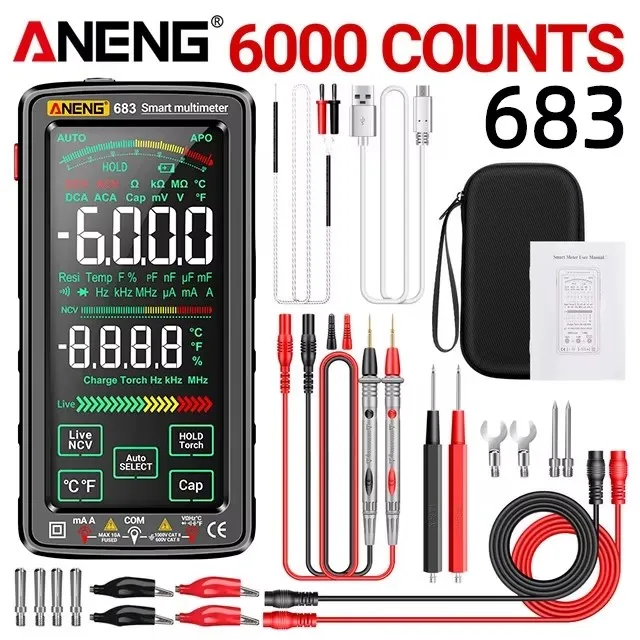 Smart Touch Multimeter – 6000 counts, rechargeable – AC/DC measurements, resistance, capacitance, frequency & temperature€49.90
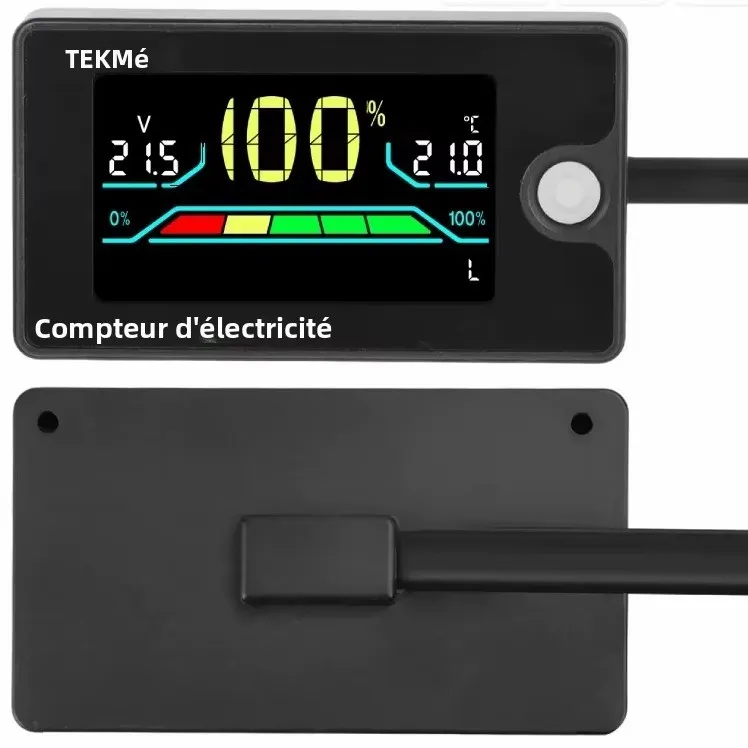 LCD Digital Voltmeter DC 8–100V – Multi-type Battery Status Indicator€9.90